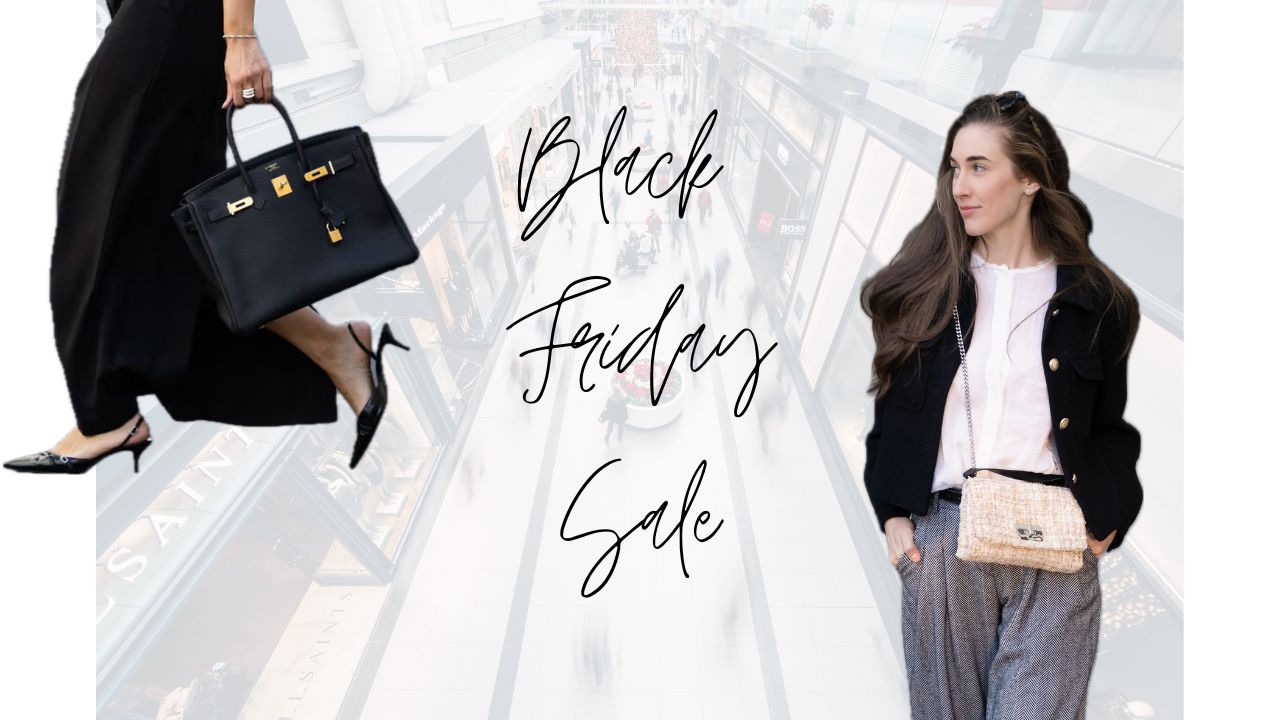
Black Friday stopped being just a single day of discounts long ago — today, it’s a global fashion event that reveals how brands operate, how they form their prices, and how they manage the value of their pieces. And although it may seem like the perfect opportunity to buy everything that has been sitting on your wish list, the reality is a bit different.
The world of high-street fashion and the world of luxury view Black Friday in completely different ways — and understanding that difference is the key to smart, intentional shopping.
In this post, I’ll guide you through everything you need to know — from the origins of Black Friday and the quality of discounted pieces to the best timing for fashion investments and how to recognize true value even within the “biggest” discounts.
Why Black Friday matters for Brands
Black Friday has become synonymous with “the best deal of the year.” People love it because it creates a sense of exclusivity — timing, limited quantities, and short duration always add a touch of adrenaline.
But the real value of Black Friday isn’t in the percentages alone. It matters equally to high-street and luxury brands, but for completely different reasons:
- High-street brands use it to move massive volumes of merchandise, clear excess stock, and attract as many customers as possible.
- Luxury houses use it carefully, selectively, and most often indirectly — through multibrand retailers, rarely on their own websites — because they don’t want to jeopardize their brand or its long-term value.
The myth that Black Friday is “the biggest sale of the year” often remains just that — a myth. True investment opportunities tend to appear at completely different times.
Black Friday from the High-Street perspective
High-street brands use Black Friday very aggressively. Discounts of 30–70% are common — but this raises an important question: are special Black Friday collections produced?
The answer is: very often, YES.
These are pieces made through faster production processes, with simpler cuts and significantly lower quality — thinner materials, minimal or no lining, low-quality buttons and hardware, and overall weaker construction.
That’s why it’s essential to look closely at the fabric composition, finishing, seams, fabric weight, and fit.
If you’re shopping high-street during Black Friday, the smartest picks are:
- coats (always check the composition)
- knitwear
- boots and ankle boots
- classic basics (turtlenecks, solid-color tees, simple shirts)
Try to avoid trend pieces — they’re often a trap: a small discount with a high risk.
Black Friday from the Perspective of Luxury Brands
In the world of luxury, a 20% discount is considered generous. Luxury brands rarely offer discounts — and almost never above 10–15%. Anything higher undermines exclusivity, disrupts pricing strategy, and weakens the perceived value of the brand.
Where Can You Find Luxury Pieces at More Accessible Prices?
You can more often find luxury items at more accessible prices in:
- multibrand retailers (MyTheresa, SSENSE, Matches, Net-a-Porter)
- local premium retailers, or
- platforms like Farfetch, through selected boutiques that occasionally offer lower prices.
Warning!
Many premium and luxury brands have special lines made exclusively for outlet stores.
They often look identical at first glance, but the difference is significant — and it’s hidden in the quality of materials, the way the item is constructed, the finishing, the lining, and the overall internal structure. All of this directly affects even the weight of the product.
Understanding materials is essential, because fabric quality is the key to distinguishing a truly good purchase from a poor one.
Pieces That Are Never on Sale
There is a clear group of high-end luxury pieces that never — or almost never — go on sale. These items are the backbone of a brand, they have steady demand, and their value must not be diminished by discounts.
These include:
- the brand’s core collections
- iconic handbags (often with waiting lists)
- classic shoes
- fine jewelry
The reason is simple: maintaining price integrity. Luxury houses protect the value of their products, and discounting these core pieces would undermine that long-term perception.
Are Special Pieces Made Specifically for Discounts?
High-street brands very often run two parallel production lines:
- regular collections
- outlet/discount collections
How to recognize them:
- the fabric feels lighter and thinner
- seams are less stable
- buttons, zippers, and hardware are cheaper
- classic details are missing (lining, inner pockets)
- the price is suspiciously low, even though the model looks “just like the previous one”
This doesn’t mean the piece is necessarily bad — but it does mean you should shop consciously and carefully check the composition and overall quality before making a final decision.
When Is the Best Time for Fashion Investments?
Black Friday can be great, but it’s not the ideal moment for luxury investments.
The real luxury discounts appear in:
- January → post-holiday markdowns
- June → end-of-season sales
These periods should be approached thoughtfully, with intentional choices that complement your existing wardrobe.
The goal is for that luxury piece to be truly worn — and enjoyed — for years to come.
The Difference Between Real and Marketing Discounts
Many brands strategically use the word “sale” — but often to achieve entirely different goals.
Real discounts are those applied even to popular, in-demand pieces.
These are the most common signs of a marketing trick:
- a discount after the price was previously increased (always check multiple websites or use price-history tools)
- discounts applied only to the least popular items
- “up to -70% OFF” — a psychological tactic; pieces with such high markdowns are usually leftover sizes (very small or very large), damaged items, or outdated models
- discounts that last for two months
- brands that have “special sales” too often
- “buy 2, get the 3rd free” — in reality, you usually end up paying for all three
These kinds of “discounts” are mostly designed to bring customers into the store, not to offer true value.
What Black Friday Looks Like in Luxury Multibrand Stores
This is the most realistic source of genuinely good deals.
Multibrand retailers operate under a completely different logic than luxury houses:
- they must sell everything they buy
- their seasons are shorter
- they imitate high-street dynamics, but with a premium assortment
- they offer discounts more quickly because warehouse storage is extremely expensive
Typical discounts:
- 15–30% on luxury
- 30–50% on premium
- an additional 10% for newsletter subscribers or selected cards
The best deals usually appear in short, limited windows — often within the first hours of the sale, when the most sought-after pieces sell out before you can even blink.
How to Shop with Strategy, Not Emotion
Smart shopping starts before you open your first website.
Begin by taking a clear look at your wardrobe and creating a list of priorities.
When choosing a piece, choose quality.
Instead of chasing big discounts — think about long-term wear. You’re buying the product, not the discount.
Before making a decision, ask yourself some (or all) of the following questions:
- Does this piece truly fit my style — or do I just like it in this moment?
- Can I pair it with at least three items I already own?
- Does it suit my daily life and lifestyle?
- How does it fit in terms of cut, length, proportions, and silhouette?
- Is the material and construction quality at the level I expect?
- How often will I realistically wear it — and does it have long-term durability?
- Is it a trend or a timeless option?
- Is the price justified by its functional value (cost per wear)?
- Do I already own something similar?
- Would I buy it even if it weren’t on sale?
Black Friday can be a great opportunity — but only if you shop consciously.
Less spending. More investing. Build a wardrobe that lasts, not one that only grows.
Did this post change the way you think about discounts?
I’d love to hear your thoughts — share them in the comments below!